
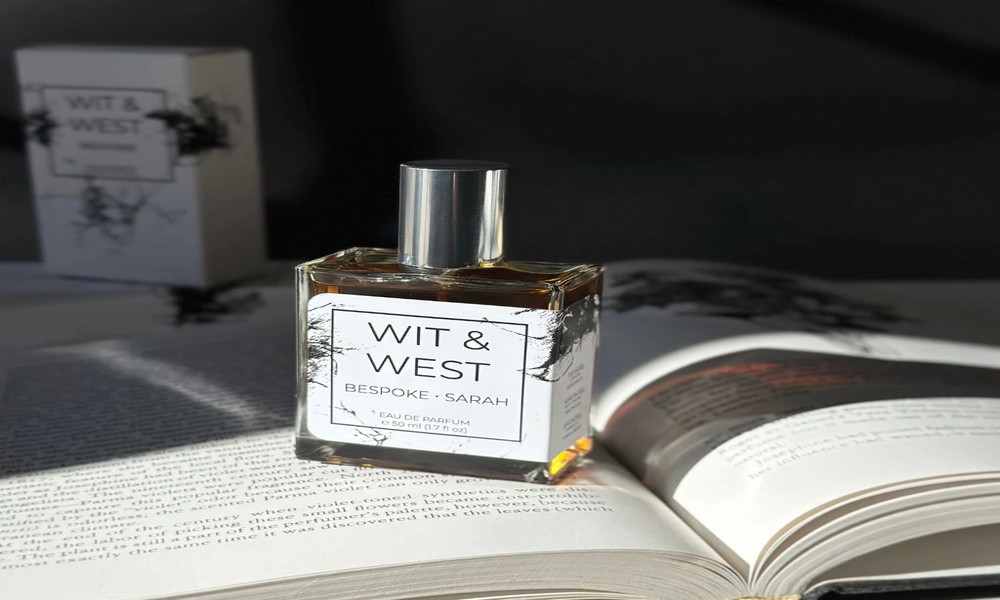
You and your best friend buy the same perfume. You spray it on at the same time, in the same room, from the same bottle. An hour later, you smell nothing alike. One of you is wearing something warm and golden. The other smells green, almost herbal. Neither of you is imagining it.
This is one of the most fascinating – and most misunderstood – things about natural perfume. It doesn’t just sit on top of you. It interacts with you. And that’s not a bug. It’s the whole point.
Your Skin Is Not a Neutral Surface
Mainstream fragrance marketing would have you believe that a perfume smells like what’s in the bottle. Spray it on, smell like that, done. And with heavily synthetic fragrances, that’s often closer to the truth – synthetic molecules are engineered for stability and uniformity, designed to project the same scent regardless of who’s wearing them.
Natural perfumes work differently. Every botanical ingredient – every drop of essential oil, every resin, every steam-distilled flower – is a living chemical system. These compounds don’t just float above your skin. They react with it. They mix with your skin’s pH, your natural oils, your microbiome, even your body temperature. The result is something genuinely, beautifully personal.
At Wit & West, every fragrance is formulated using 100% botanical and naturally derived ingredients, carried in a USDA organic grape alcohol base. There are no synthetic stabilizers forcing a fragrance to behave the same way on every person. What you smell is real – and it responds to who you are.
The Science Behind the Magic
Your skin’s pH sits somewhere between 4.5 and 6.5, but that range varies meaningfully from person to person – and even from one area of your body to another. Skin that leans more acidic tends to amplify sharp, citrus-forward top notes and can cause certain florals to read as brighter and lighter. More alkaline skin does the opposite, drawing out depth and warmth, coaxing out the resins and woods that live in a fragrance’s base.
Skin hydration matters too. Well-moisturized skin – either naturally oily or prepped with an unscented lotion – holds fragrance longer and lets it develop more fully through its stages. Dry skin tends to drink up the top notes quickly, sometimes skipping past the opening of a scent and landing in the heart faster than expected.
Then there’s your diet, your hormones, your stress levels, even the medications you take. All of it subtly alters your skin chemistry. All of it shapes how a natural perfume lands on your body.
Why the Same Scent Tells Different Stories
Take Wit & West’s Caldera Flower, which was praised by Fragrantica reviewers for its opening of ylang-ylang and ginger – a combination described as almost bubblegum-like in its warmth and softness – before drying down into sandalwood and ambrette. That arc is the intended journey. But how quickly you move through it, which notes linger longest, and which aspects of the drydown become dominant? That’s between you and your skin.
Someone with naturally warm, oily skin might find the ylang-ylang blooms slowly and stays for hours. Someone with drier, more neutral skin might find the ginger sparks bright and fast before the sandalwood takes over almost immediately. Same bottle. Entirely different experience.
This is why two people can read reviews of the same natural fragrance and feel like they’re describing completely different things – because in a very real sense, they are.
The Role of the Nose You Were Born With
Skin chemistry is only half the equation. The other half is olfactory perception – the way your brain interprets what your nose detects. Humans share roughly 400 functional olfactory receptor genes, but the specific combination active in your nose is unique to you. Some people are highly sensitive to certain musks and can detect ambrette at the faintest concentration. Others barely register it. Some people find vetiver earthy and grounding; others experience it as sharp and medicinal.
There’s no right answer. There’s no malfunction. It’s just the extraordinary diversity of human sensory experience playing out through fragrance.
This is also why a Scent Quiz – like the one Wit & West offers on their site – is genuinely useful. It’s not a gimmick. Matching people to fragrances based on their preferences and instincts acknowledges that perfume is subjective, personal, and should be chosen with intention rather than blind guesswork.
Wearing Natural Perfume as a Personal Act
There’s something quietly radical about wearing a fragrance that becomes yours in the truest sense – not just because you bought it, but because your body helped create what it smells like. Natural perfume doesn’t perform for the room the way a synthetic fragrance might. It doesn’t project a uniform cloud of scent that announces you from across the office. It lives closer to the skin. It reveals itself gradually, to people who are near enough to notice.
That intimacy is intentional in artisan natural perfumery. Wit & West’s fragrances are made in small batches, formulated by hand, with ingredients chosen for the way they move and evolve – not for how loudly they perform. They are designed to work with a person, not on top of one.
So the next time you try a natural perfume and it smells nothing like you expected – or nothing like what someone else described – don’t be discouraged. That’s not a mismatch. That’s the fragrance meeting you.
That’s the whole idea.
Curious which Wit & West fragrance is the right starting point for your skin and your nose? Take the Scent Quiz and find the one that was made to become yours.

Comments are closed.